Phone:
(949) 394 6355
Physical address:
2941 S Main St. Unit A, Santa Ana, CA, 92707
Phone:
(949) 394 6355
Physical address:
2941 S Main St. Unit A, Santa Ana, CA, 92707
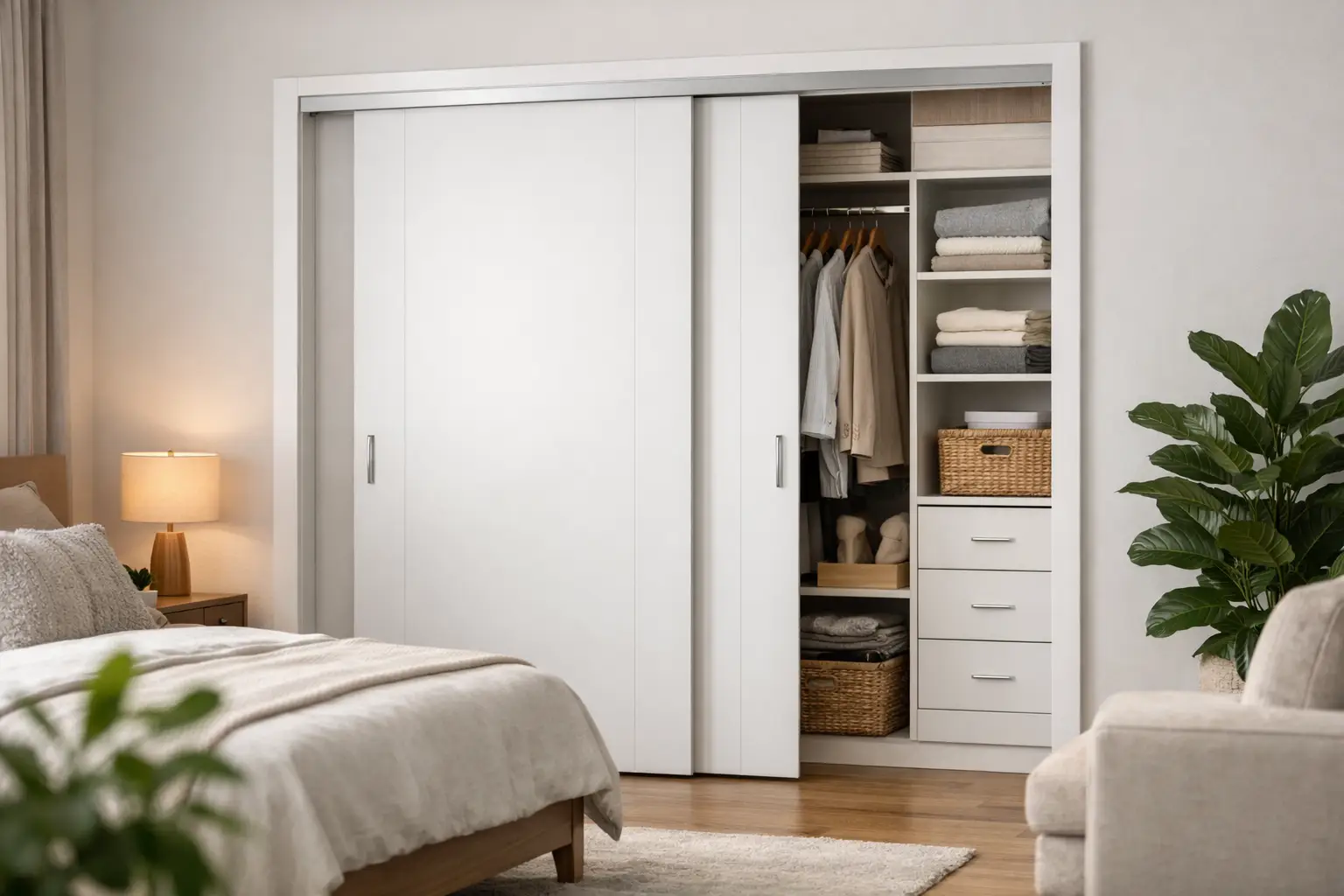
Sliding bypass doors are the most popular closet door for a reason. Here's how to choose panels, hardware and the right number of tracks for your closet.
Sliding bypass doors are the workhorse of the American bedroom closet. They don’t swing into the room, they’re simple to use and they come in everything from plain white panels to full mirrors. But not all bypass systems are equal, and the details make the difference between doors that glide and doors that grind.
Bypass doors hang or roll on parallel tracks so the panels slide past each other. Because they never swing open, you can put a bed, dresser or nightstand right up near the closet. That makes them ideal for smaller bedrooms, hallways and anywhere floor space is tight.
A closet you open ten times a day needs smoother rollers and a sturdier track than a guest-room closet. For daily-use closets, put your money into hardware quality first.
Quality bypass systems use steel or heavy aluminum tracks and smooth, adjustable rollers. Cheap systems use thin tracks and plastic wheels that flatten over time. Our McCoy doors, for example, use commercial-grade tandem rollers on a stainless steel track.
A standard two-panel bypass always covers half the opening. On a closet up to about 6 feet wide, that’s usually fine. On wider closets, a triple-track three-panel system lets you open about two-thirds of the width at once, which makes a huge difference when you’re reaching for clothes at the ends.
Many of these are repairable with new rollers or a guide. If the track is bent or the panels are damaged, replacement is usually the better value.
Bypass doors need the right overlap in the middle and even gaps at the sides. If the opening is out of square, standard doors either leave gaps or bind. Custom panels built to your measured opening sit right from day one.
Most of our installations are done in a single day. New sliding doors typically run $550–$850 per panel installed, with a 3 to 5 year manufacturer warranty and our 1-year labor warranty.
Not at all. Modern frameless mirrors, glass inserts and slim frames make bypass doors one of the most current-looking options.
Often, yes. If the panels are in good condition, new rollers and guides can restore smooth operation.
Ready to upgrade your sliding closet doors? Call or text (949) 394-6355 or request a free in-home estimate in Orange County.