Phone:
(949) 394 6355
Physical address:
2941 S Main St. Unit A, Santa Ana, CA, 92707
Phone:
(949) 394 6355
Physical address:
2941 S Main St. Unit A, Santa Ana, CA, 92707
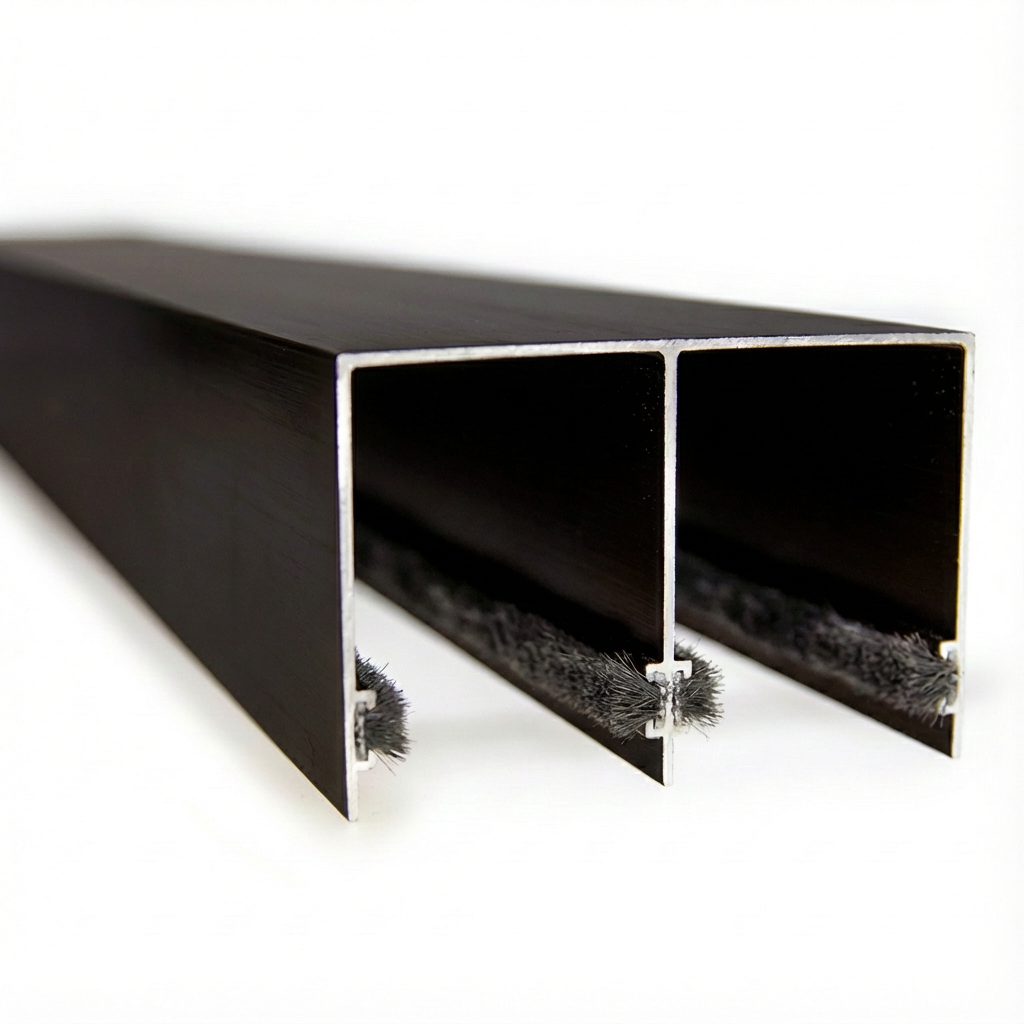
A broken or bent rail isn't just annoying — it accelerates wear on your door panels and creates a safety hazard. Here's what causes rail failure and what a full replacement involves.
A failing closet door rail announces itself gradually. First the door doesn’t slide quite as easily. Then it starts jumping if you push it too fast. Then one day it comes off the track entirely. By that point the panels, the hardware, and your patience have all taken damage.
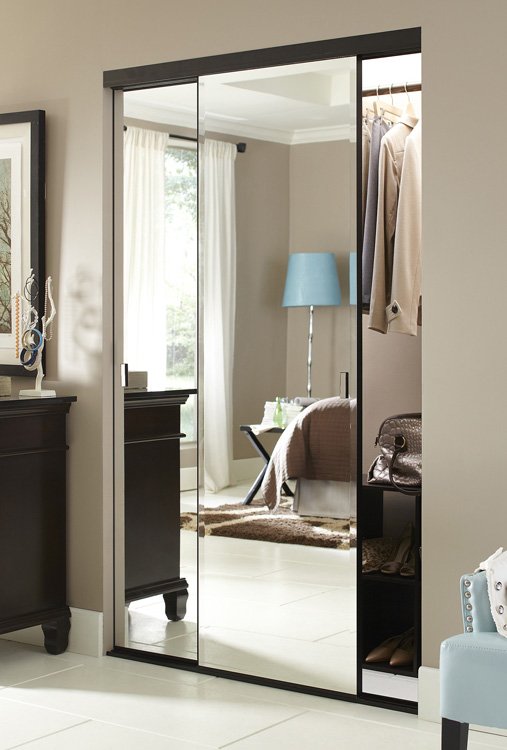
Builder-grade bypass door rails are typically thin-wall aluminum extrusions — they flex under load. A 50-lb mirrored panel hitting the end stop repeatedly, year after year, distorts the channel. Once the channel is no longer perfectly square, rollers start dragging instead of rolling, which accelerates wear on everything downstream.
The top rail needs to be screwed into solid material — ideally blocking or a double top plate — across its entire length. Nailing into drywall alone gives the rail room to flex with every door movement. Over time it pulls away from the ceiling line and the panels start to tip.
The bottom guide isn’t just decorative. It keeps the bottom of each panel from swinging outward, which puts lateral load on the top rollers. Without a functioning bottom guide, the rollers carry stress they weren’t designed for and the top track gets pulled out of alignment even faster.
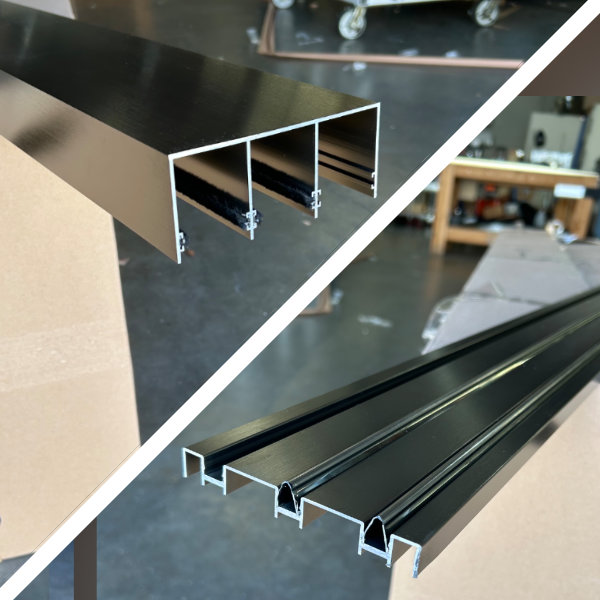
A proper rail replacement isn’t putting a new track in the same holes. The process:
Technically yes. Practically, it’s rarely worth it. A patched rail never quite returns to true, which means the rollers still drag at the repair point. The labor cost of straightening and shimming a damaged rail approaches the cost of a new one — and a new commercial-grade rail will outlast the panels by decades.
We serve Orange County, LA County, and the Inland Empire. Free estimates — fast installation.
(949) 394-6355